
Elephant skulls, rhino feet, and resin-coated bats – stopping the illegal wildlife trade
Main article content
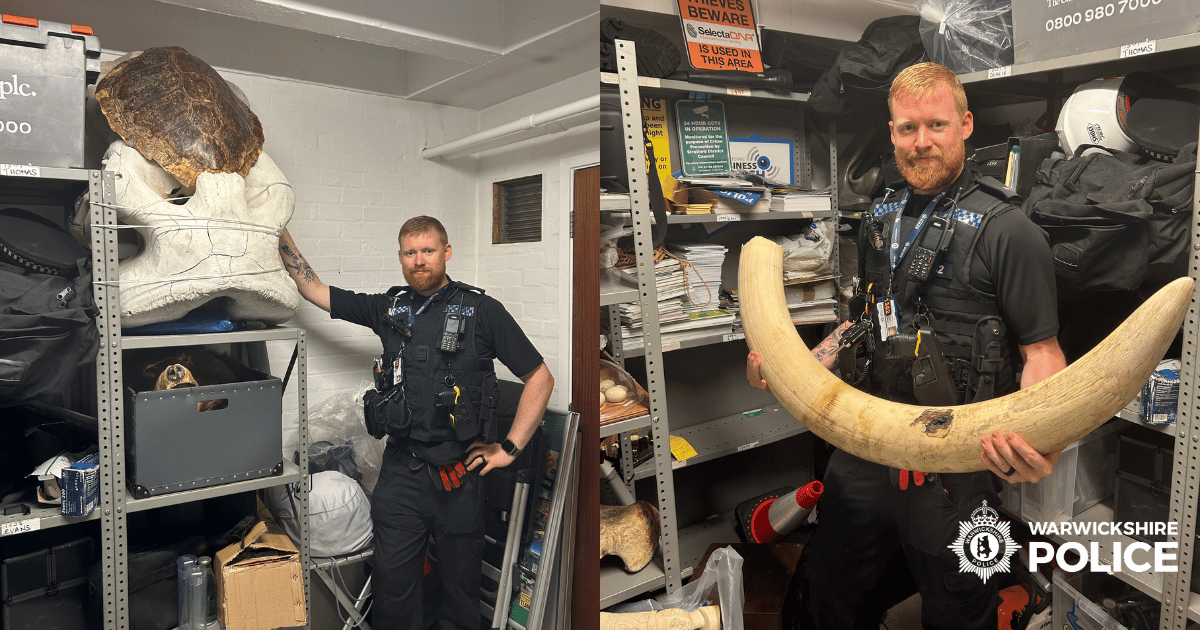
An elephant skull, a rhino’s foot, a turtle shell, a resin-coated pipistrelle, and a bag made of an iguana –
These are just some of the items that our officers have seized under wildlife protection laws like CITES – the Convention on International Trade in Endangered Species.
These items were seized during our investigations into both antique shops and private collections.
PC Tyler from the Warwickshire Police Rural Crime Team recounted the story of the elephant skull, which had been part of an entire elephant skeleton that was seized when the owner had tried to have it tied together as a full taxidermy model.
The skull was accompanied by a large haul of other CITES-banned products and taxidermies of other African Big Five animals which were being used commercially without valid importation paperwork or certificates.
The team are currently in discussions with experts at the University of Bristol to take the elephant skull as an educational and research piece.
We make every effort to repurpose these seized products for crime education, or to give them to universities for research purposes.
Ivory in particular has strict laws around both its sale and its purchase – under the Ivory Act 2018, it is prohibited not only to sell, but also to purchase or advertise any product containing ivory, with some exemptions for antiques (although those looking to sell on antique ivory products will need to have the proper certificates to do so legally).
Not all of the seized items are exotic in origin – our current storage included a whole pipistrelle bat which had been encased in resin and a badger rug.
Pipistrelles and badgers aren’t protected under CITES but are protected under other wildlife laws in the UK.
The aim of all of this is to protect wildlife both in the UK and abroad, making it as difficult as possible for criminals to profit from the death of endangered or at-risk animals and plants, preserving them for the next generation and helping keep their environments in balance.
Did you know we’re helping research into ivory detection? Have a look at the Warwickshire Rural Crime Team’s post to find out more: https://www.facebook.com/WarwickshireRuralCrimeTeam
&w=1024&h=630&scale=both&mode=max)
&w=1024&h=630&scale=both&mode=max)
&w=1024&h=630&scale=both&mode=max)
&w=1024&h=630&scale=both&mode=max)
&w=1024&h=630&scale=both&mode=max)
&w=1024&h=630&scale=both&mode=max)
&w=1024&h=630&scale=both&mode=max)